
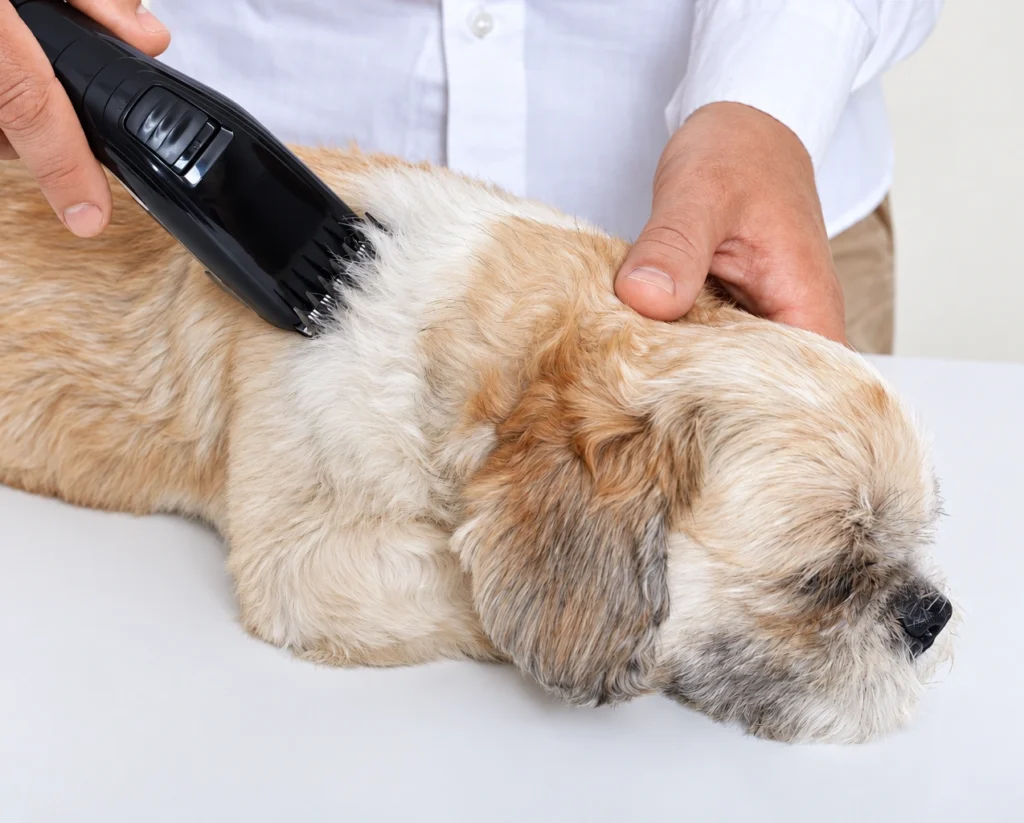
A Labrador and a Shih Tzu do not need the same grooming schedule, yet many owners follow the same rough rule of thumb regardless of what kind of coat their dog actually has. How often should you groom your dog is really a question about coat type first and personal preference second, since a smooth short coat and a dense double coat age, shed, and mat in completely different ways.
Grooming is often treated as a cosmetic extra, something for a dog’s appearance rather than its health. In practice, the coat is the thing standing between a groomer or owner’s hands and the skin underneath, and a coat that goes too long between brushings can hide problems, from hot spots to early signs of a flea infestation, until they have already become uncomfortable for the dog. The Merck Veterinary Manual advises regularly brushing dogs to remove loose hair and prevent mats, especially thick or long coats, and notes that matted hair can irritate the skin and lead to infections.
This guide explains how often should you groom your dog based on coat type, why the routine matters for skin health and not just appearance, and what signs suggest a dog’s current grooming schedule needs to change. Grooming for dogs does not have to be complicated once you know which coat category your dog actually falls into.
How Often Should You Groom Your Dog by Coat Type
Coat type is the single biggest factor in how often should you groom your dog, more than breed size, activity level, or age on its own. A short, smooth coat, a dense double coat, a long silky coat, and a curly or wire coat each wear differently, and the sections below break down why that difference matters, how brushing and bathing schedules compare across coat types, and the one common grooming mistake double coated owners should avoid.
Why Coat Type Changes the Grooming Answer
A short, smooth coat sheds relatively evenly and rarely mats, so a weekly brushing session is often enough to keep loose hair under control and give an owner a regular look at the skin underneath. A double coat behaves very differently: the soft undercoat traps loose hair, dirt, and moisture against the skin if it is not brushed out regularly, which can lead to hot spots and skin irritation that stay hidden under a coat that looks fine from the outside.
Long and curly coats carry their own risk, since mats can form close enough to the skin to pull and cause pain with every movement, and a heavily matted coat can trap moisture against the skin for days at a time. This is really the core reason grooming frequency matters beyond appearance: the coat is covering skin that needs regular air and light contact to stay healthy, and the only way to know it is healthy is to actually see it during brushing or a grooming appointment.
Brushing Frequency by Coat Type
The table below breaks down brushing frequency by coat type as a practical starting schedule.
| Coat Type | Typical Dogs | Brushing Frequency |
| Short and smooth | Labradors, Beagles, Boxers | Weekly, more often during seasonal shedding |
| Double coated | Golden Retrievers, Huskies, German Shepherds | Two to three times a week, daily during heavy shedding seasons |
| Long and silky | Shih Tzus, Yorkshire Terriers, Maltese | Daily to prevent mats from forming close to the skin |
| Curly or wire coated | Poodles, many Terrier breeds | A few times a week between professional grooming appointments every four to six weeks |
These are starting points rather than fixed rules, since an individual dog’s activity level, time spent outdoors, and skin condition can all shift how often brushing or bathing actually needs to happen. The same coat-first thinking applies to cats too, as covered in our guide on how often cats should be groomed, though a dog’s much wider range of coat types makes the frequency question more complicated to answer in general terms.
Bathing Frequency by Coat Type
Brushing frequency gets most of the attention, but bathing needs to be matched to coat type as well, and more is not automatically better. Bathing too often strips the natural oils that keep skin and coat healthy, which can leave a dog with dry, flaky skin and a dull coat regardless of how well it is brushed. Short, smooth coated dogs and double coated dogs generally do well with a bath every four to six weeks unless they get visibly dirty or start to develop an odor sooner. Long and curly coated dogs are often bathed more frequently, sometimes every two to four weeks, since regular bathing helps loosen the debris and early mats that brushing alone can miss, particularly between professional grooming appointments. A dog with a diagnosed skin condition may need a different bathing schedule entirely, which is worth discussing directly with your veterinarian rather than guessing. Merck suggests bathing with pet shampoo about once a month, depending on the season, or whenever the coat is very dirty or smells bad.
Never Shave a Double Coated Dog
One of the most common grooming mistakes owners make with double coated breeds is shaving the coat down for summer, assuming it will keep the dog cooler. The double coat actually works as insulation against both heat and cold, and the undercoat also protects against sunburn. Shaving it can result in uneven regrowth, increased sun exposure to the skin, and in some cases a permanently damaged coat texture. Regular brushing to remove the loose undercoat, sometimes called deshedding, achieves the cooling effect owners are looking for without the downsides of shaving. The American Kennel Club explains that a double coat helps regulate temperature and protect the skin, and that grooming professionals generally advise against shaving double coated dogs unless there is a medical reason.
Grooming Dog Owners Can Do at Every Life Stage
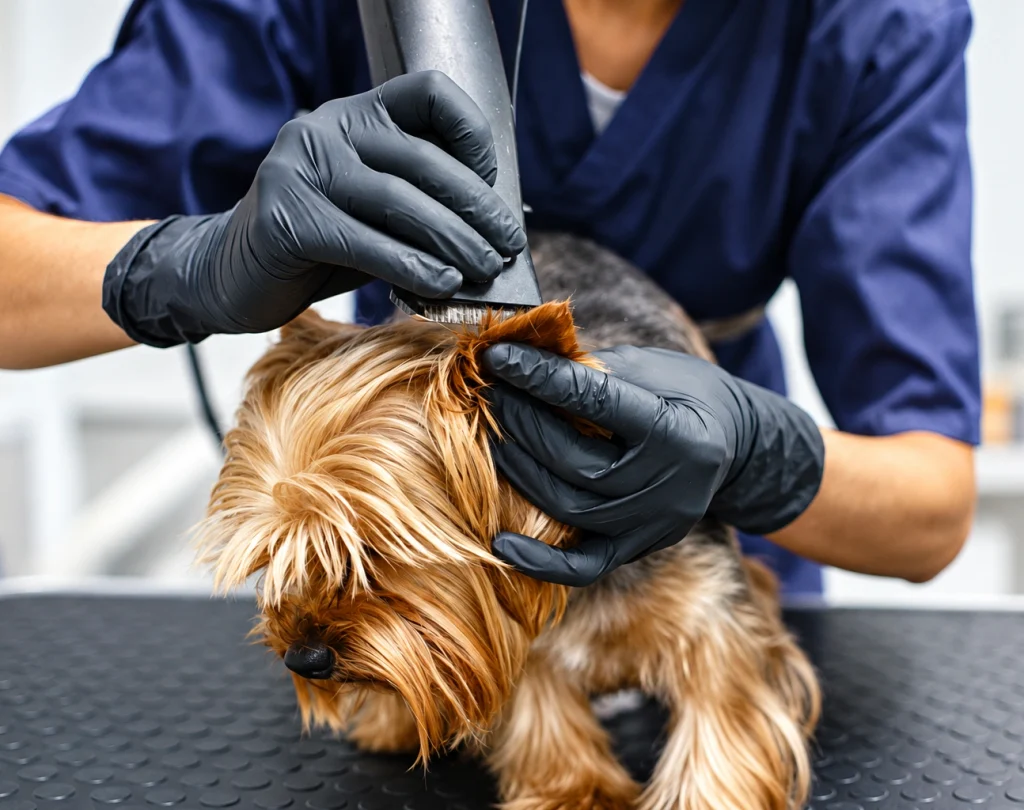
Grooming needs shift over a dog’s life, not just by coat type.
Puppies
Puppies benefit from short, positive grooming sessions introduced early, even before their coat requires much maintenance, so they learn to tolerate brushing, nail trims, and ear checks calmly as adults. This is worth starting during the same period covered in our new puppy resources.
Adult Dogs
Adult dogs settle into the coat-type schedule outlined above, adjusted for how much time they spend outdoors or in water. Dogs with curly or wire coats also benefit from a consistent professional grooming interval rather than letting the gap stretch out, since a coat left too long between appointments is more likely to have developed mats that require a shorter, less comfortable clip to remove.
Senior Dogs
Senior dogs often need gentler handling and shorter sessions, since arthritis or skin thinning can make brushing uncomfortable if it is rushed, and any new lump, growth, or skin change noticed while grooming an older dog is worth mentioning at the next wellness exam.
Signs Your Dog’s Grooming Routine Needs to Change
Beyond the standard dog grooming tips of brushing on a schedule and bathing at the right interval, a few signs usually mean it is time to brush more often or bring in a professional groomer sooner than usual:
- Mats that have formed close to the skin, especially behind the ears, under the front legs, or around the tail, can pull and cause pain and often need professional removal rather than home brushing. Merck warns against using scissors on mats because it is easy to cut the skin.
- A dog that suddenly seems itchier or more uncomfortable than usual during brushing may have a skin issue hiding under the coat that is worth having checked.
- Noticeably heavier shedding than the dog’s normal seasonal pattern can point to a nutritional, hormonal, or skin health issue rather than simply needing more frequent brushing.
- An odor that returns quickly after a bath, rather than fading with normal time between baths, can signal a skin infection that grooming alone will not resolve. The Merck Veterinary Manual on topical treatment describes topical therapy as a key component of managing bacterial and yeast overgrowth, often as first line treatment.
- Visible redness, flaking, or bald patches discovered while brushing are worth a veterinary look rather than waiting until the next scheduled grooming appointment.
Building a Grooming Routine That Works for Your Dog’s Coat
There is no single answer to how often should you groom your dog that works for every dog, since a routine built around a Labrador’s coat will leave a Shih Tzu matted within days, and a routine built around a Shih Tzu is more brushing than most short haired dogs need. Matching the schedule to the coat, and adjusting for age and activity level, keeps the coat comfortable and gives you a regular look at the skin it is protecting.
If you are not sure what grooming schedule fits your dog’s coat, or it has been a while since a professional look at your dog’s skin and coat, the team at Eagle Animal Hospital in Chester Springs can help. Request an appointment online or explore our veterinary services to get started.
Sources
Merck Veterinary Manual, Routine Health Care of Dogs (accessed 2026).
Peer reviewed veterinary reference for dog owners.
Supports regular brushing, mats and skin irritation, the scissors warning and the bathing interval.
Merck Veterinary Manual, Principles of Topical Treatment in Animals (accessed 2026).
Peer reviewed veterinary reference.
Supports the role of topical treatment for bacterial and yeast overgrowth.
American Kennel Club, What Is a Double Coated Dog, Coat Types, Grooming, and Care (accessed 2026).
Breed registry and dog owner education organization.
Supports the double coat function and the advice against shaving.
Frequently Asked Questions
Q: How often should you groom your dog if they have a double coat?
A: Most double coated breeds do best with brushing two to three times a week, increasing to daily during heavy seasonal shedding in spring and fall. Regular brushing removes loose undercoat before it mats and helps keep the skin underneath healthy.
Q: Is it okay to shave my dog’s coat in the summer to keep them cool?
A: For double coated breeds, no. The undercoat insulates against heat as well as cold, and shaving it can lead to uneven regrowth and increased sun exposure to the skin. Regular deshedding brushes out the loose undercoat and provides a similar cooling effect without those risks.
Q: How can I tell if my dog needs more frequent grooming?
A: Mats forming close to the skin, heavier than normal shedding, a returning odor after bathing, or any redness or irritation noticed during brushing are all signs the current routine needs to change. A veterinary exam can rule out a skin condition if these signs continue.
Q: Do short haired dogs still need regular grooming?
A: Yes, though less often than long or double coated breeds. Weekly brushing for a short, smooth coated dog still helps control shedding and gives you a chance to check the skin, ears, and nails on a regular basis.
Q: At what age should I start grooming my puppy?
A: Puppies can be introduced to short, gentle grooming sessions well before their adult coat comes in, which helps them tolerate brushing, nail trims, and ear checks calmly later in life. Starting early during puppyhood makes lifelong grooming far less stressful for both the dog and the owner.