
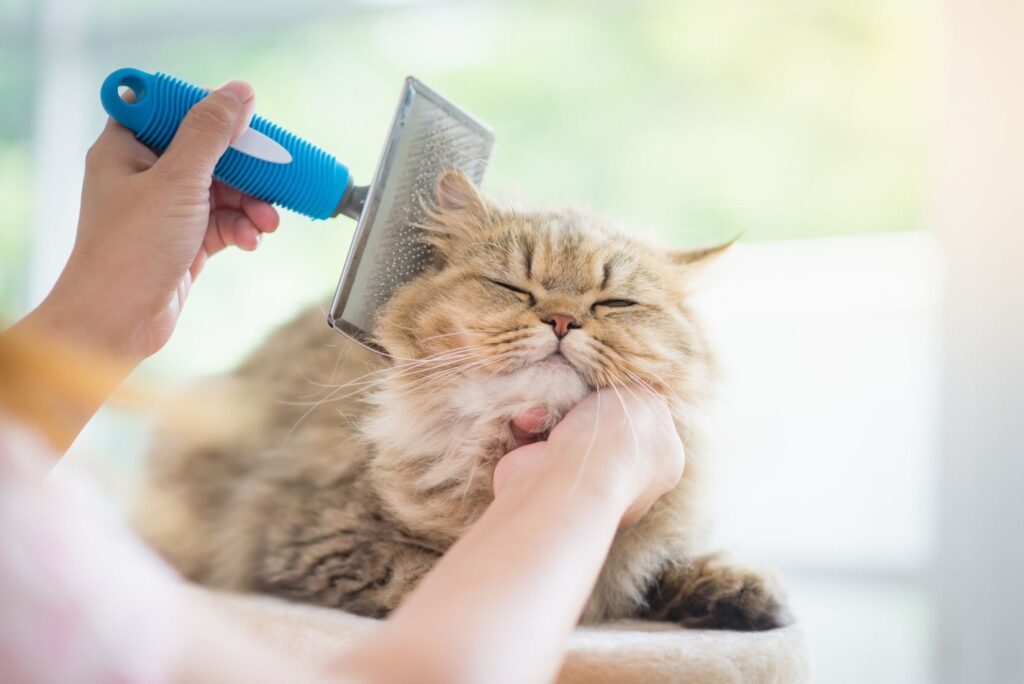
Cats are well-known for grooming themselves, and they do a remarkable job of it. But self-grooming has limits. Cats ingest loose fur as they lick, which accumulates in the digestive tract and eventually becomes a hairball. Longer or denser coats can develop knots and mats that a cat cannot remove on its own, and these can pull at the skin, trap moisture, and create conditions for irritation or infection underneath.
Understanding how often cats should be groomed, and what that grooming should include, helps owners make informed decisions about both at-home brushing routines and professional grooming appointments. The answer is not the same for every cat, and coat type is the biggest factor in determining the right schedule.
Why Regular Grooming Matters for Cats
Regular grooming is about more than appearance. Brushing removes loose fur before the cat ingests it, which is one of the most effective ways to reduce how often cat hairballs form. Mats, when left in place, tighten over time and become painful to remove. In severe cases, they can restrict blood flow to the skin beneath them or hide wounds and parasites.
Grooming sessions also give owners a chance to notice changes in the coat or skin, including dry patches, excessive oiliness, lumps, redness, or signs of fleas, that might otherwise go undetected until they become more serious. This is particularly valuable for senior cats or cats with health conditions that affect coat quality, since coat changes are often early indicators of underlying health issues. Regular grooming connects naturally to overall wellness care, particularly routine wellness exams where a veterinarian can assess coat and skin health in detail.
How Often Cats Should Be Groomed Based on Coat Type
The right cat grooming schedule depends primarily on coat length and density. There is no single answer that fits every cat, but the following framework covers the most common coat types.
Short-Haired Cats
Short-haired cats are the most self-sufficient groomers. Their coats are less prone to matting, and loose fur is more easily managed. Most short-haired cats benefit from brushing once or twice per week. During peak shedding seasons, typically spring and autumn, increasing to three or four sessions per week helps control cat shedding and reduces fur ingestion. A fine-toothed comb or soft rubber brush works well for most short-haired breeds.
Medium-Haired Cats
Medium-haired cats fall between the two extremes. They benefit from brushing two to three times per week under normal conditions, and more frequently during heavy cat shedding periods. Areas behind the ears, under the arms, and around the collar are common spots where knots form first and should receive extra attention during each session.
Long-Haired Cats
Long-haired cats require the most consistent grooming. Daily brushing is the standard recommendation for most long-haired breeds, since their coats can mat quickly if loose fur is not removed regularly. Even with daily home brushing, professional grooming every six to eight weeks is often beneficial for long-haired cats to address deeper matting, trim around sensitive areas, and maintain the coat at a manageable length.
For cats whose coats have become too matted to manage with brushing alone, a lion cut is an effective option. This professional clip removes the coat to a short, uniform length, giving the skin underneath a chance to recover and making coat maintenance significantly easier going forward.
At-Home Brushing: Starting Early and Staying Consistent
The best time to establish a grooming routine is during kittenhood, when cats are most adaptable to new handling. Using a soft bristle brush, start by gently stroking the kitten’s back a few times while it is relaxed, ideally during a drowsy moment in your lap. Keep sessions short and positive, and use treats to build a calm association with being brushed.
Gradual desensitization to paw handling is equally important. Gently touching the paws and extending the claws briefly on a daily basis prepares the cat for nail trimming without resistance. Taking this approach from a young age makes the process easier for both the cat and the owner throughout the cat’s life.
For adult cats that have not been brushed regularly, the introduction process may take longer. Start with brief, gentle sessions and increase duration as the cat becomes more comfortable. Forcing a grooming session on an unwilling cat often creates lasting resistance, so patience in the early stages is worth the investment.
When Professional Cat Grooming Makes Sense
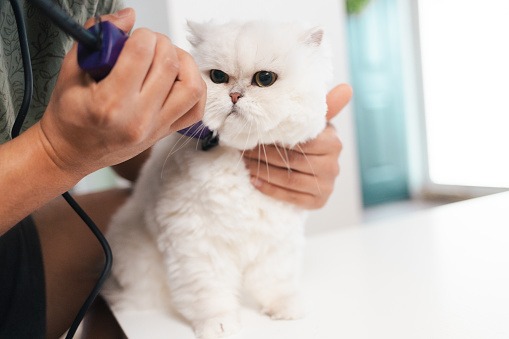
At-home brushing handles the basics, but professional grooming offers a level of thoroughness that is difficult to replicate at home. A professional groomer can safely address matting that has progressed beyond what a brush can manage, trim nails precisely, clean around sensitive areas, and perform specialized cuts like a lion cut that require training and experience to do safely.
Signs that a professional grooming appointment would benefit your cat include:
- Visible mats that do not loosen with brushing
- Excessive cat hairballs that continue despite regular at-home brushing
- Coat that looks dull, oily, or uneven
- Overgrown nails that are beginning to curl
- A cat that resists home grooming to the point where it cannot be completed safely
Professional grooming in a veterinary-adjacent setting also provides an additional safety net. Staff experienced in handling cats of all temperaments can manage anxious or sensitive cats more safely than a general grooming salon unfamiliar with the cat’s medical history. To learn more about professional cat grooming services, including brushing, nail trimming, dremeling, and lion cuts, visit our pet grooming page.
Nail Trimming as Part of the Grooming Routine
Nail trimming is a separate but related part of the cat grooming schedule. Overgrown nails curve inward and can grow into the paw pad, which is painful and prone to infection. For most cats, nails need trimming every three to four weeks.
Desensitizing cats to paw handling from a young age makes this significantly easier at home. For cats that remain resistant despite gentle conditioning, professional nail trimming at each grooming visit is a safe and practical alternative. A combination of at-home maintenance and periodic professional trimming works well for most owners.
Connecting Grooming to Overall Health
Grooming is one of the more visible aspects of a cat’s overall care routine, but it connects to health in ways that go deeper than coat appearance. Cats that are not groomed regularly are more likely to develop matting, skin conditions, and digestive issues from cat hairballs. Senior cats, overweight cats, or those with arthritis may gradually stop grooming areas they can no longer reach comfortably, which makes consistent owner involvement especially important in those stages of life.
A regular cat grooming schedule, supported by professional appointments when needed, is one of the most consistent and practical ways to keep a cat comfortable and well-cared for at every age. To schedule a professional grooming appointment or to ask our team for guidance on at-home brushing techniques, contact the team at Eagle Animal Hospital in Chester Springs or request an appointment online. You can also explore our new kitten resources page for detailed guidance on establishing grooming habits from a young age.
Frequently Asked Questions
Q: How often should cats be groomed at home?
A: Short-haired cats benefit from brushing once or twice per week, medium-haired cats two to three times per week, and long-haired cats daily. During heavy shedding seasons in spring and autumn, increasing the frequency for any coat type helps reduce hairball formation and matting.
Q: How do I reduce cat hairballs through grooming?
A: Regular brushing removes loose fur before the cat ingests it during self-grooming, which is the most direct way to reduce how frequently hairballs form. Daily or near-daily brushing for medium and long-haired cats makes the biggest difference. Professional grooming can also help manage heavy shedding coats.
Q: What is a lion cut and when is it recommended for cats?
A: A lion cut is a professional clip that removes the cat’s coat to a short, uniform length, leaving only the face, paws, and tail tip untrimmed. It is typically recommended when matting has progressed beyond what brushing can address, or for long-haired cats that are prone to severe matting and difficult to maintain between professional visits.
Q: How often do cats need their nails trimmed?
A: Most cats need nail trimming every three to four weeks. Overgrown nails can curl into the paw pad, causing pain and potential infection. Desensitizing cats to paw handling from kittenhood makes home trimming easier, but professional nail trimming at grooming appointments is a reliable alternative for cats that resist handling.
Q: At what age should I start grooming my cat?
A: Grooming habits are easiest to establish during kittenhood, when cats are most receptive to new handling. Start with brief, gentle brushing sessions using a soft bristle brush while the kitten is relaxed, and gradually introduce nail handling. Early positive experiences make grooming far easier to maintain throughout the cat’s adult life.