
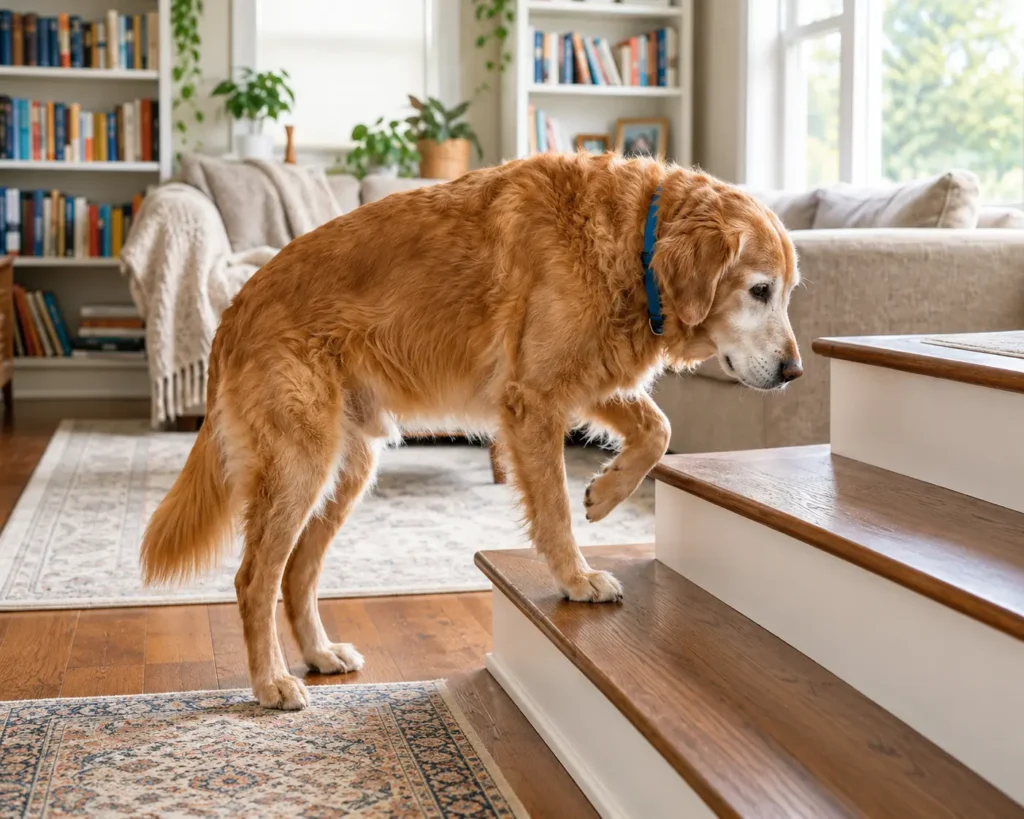
A dog that hesitates at the bottom of the stairs or takes a little longer to stand up after a nap is easy to explain away. People say the dog is getting older, or had a long walk yesterday. Because changes like these arrive slowly, many owners wonder how to tell if their dog has arthritis, and whether what they are seeing is normal aging or something a veterinarian should look at.
Arthritis in dogs is common, and it is not limited to the oldest dogs. The Cornell University College of Veterinary Medicine describes osteoarthritis as a long-term, worsening joint disease that can appear at any age, especially in dogs that are overweight or have other orthopedic conditions. Cornell also states that there is no cure, but that there are strategies for slowing its progression and for managing mobility and minimizing pain.
This guide explains the everyday signs of dog joint pain, what a veterinary exam involves, why catching the problem early matters, and what kinds of care are available, including what Eagle Animal Hospital offers in Chester Springs.
How to Tell If Your Dog Has Arthritis at Home
The signs are usually small shifts in how your dog moves, not a single dramatic event. Cornell says the signs vary from mild to severe. VCA Animal Hospitals adds that the early signs are often subtle or hard to detect, and that pets will naturally hide pain until it becomes severe. Reading the two pages together gives the picture below.
| Sign | How it may look at home | Where it is described |
| Stiffness or trouble rising | Difficulty getting up from lying down, or stiffness and limping | Cornell lists difficulty getting up and stiffness; VCA lists stiffness, limping and difficulty getting up and down |
| Stairs and furniture | Reluctance to climb or descend steps, or to jump on or off furniture | Both Cornell and VCA |
| Slowing down | Slowing on walks, or less interest in running, playing or exercise | Cornell lists reluctance to walk, run or exercise; VCA lists slowing on walks and reluctance to play |
| Changes in posture | Shifting weight while standing or walking, or sitting and lying down in a different way | VCA |
| Muscle loss | Thinner muscle over the limbs or spine | Cornell calls it muscle wasting; VCA mentions possible loss of muscle mass over the limbs and spine |
| Behavior changes | Sudden irritability or aggression | Cornell |
Cornell and VCA overlap on several of these points, which makes the shared ones a good place to start watching. Because the changes can be slight, VCA suggests capturing videos of your dog on your phone, since they can give useful information about behavior and activity at home. Showing them to your veterinarian is a sensible next step. VCA also notes that age is not a disease, which is a reminder to mention slowing down to your veterinarian.
Why Dog Joint Pain Is Easy to Miss
Because pets will naturally hide pain until it becomes severe, as VCA puts it, the signs above often show up as things your dog stops doing. For example, a dog that used to leap into the car may now hesitate.
Weight is part of the picture too. Cornell states that obesity contributes significantly to osteoarthritis because of the added force placed on the joints, and VCA lists weight gain among its five signs. If you are not sure whether your dog is carrying extra weight, Eagle Animal Hospital’s blog on how senior pets should see the vet describes checks of body condition, joint mobility and muscle tone at senior visits.
What a Veterinary Exam Looks For
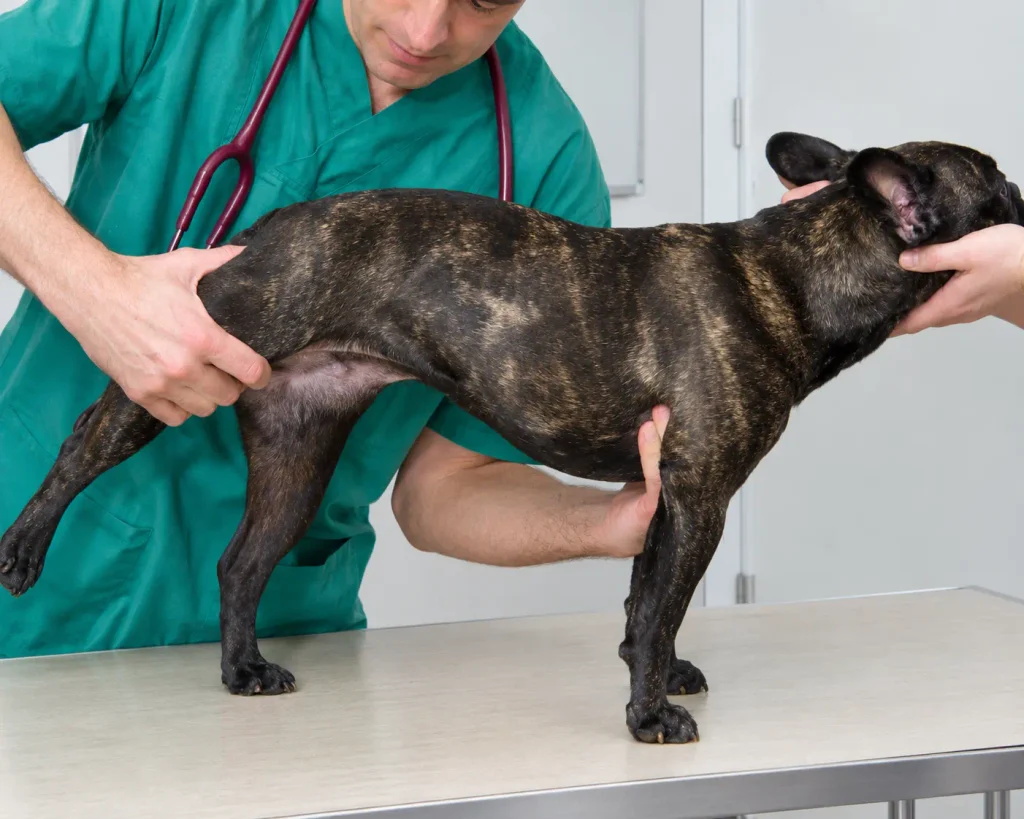
Home observations are a starting point, not a diagnosis. Cornell explains that diagnosis begins with a physical exam in which the veterinarian watches gait and posture and feels the joints for abnormal changes or signs of pain. X-rays may then be used to assess bone and joint changes and to check for underlying orthopedic problems.
At Eagle Animal Hospital, the yearly pet wellness exam includes a check of your pet’s eyes, ears, mouth, skin, coat and joints, and the wellness page says most exams take about 30 minutes. That makes the yearly visit a natural time to mention anything you have noticed on walks around Chester Springs or at home.
When imaging is needed, Eagle’s digital X-ray service lists arthritis among the conditions X-rays are commonly used to diagnose. Every X-ray is reviewed by a board-certified veterinary radiologist, and the page says the full report typically comes back within 1 business day. Most pets do not need sedation for X-rays, though mild sedation may be recommended for pets that are anxious or in pain, and the team talks this through ahead of time.
Why Early Care Protects Mobility
Cornell is direct on this point. It states that the earlier osteoarthritis is diagnosed and managed, before severe progression, the better the long-term outcome. Because the condition is progressive and has no cure, early attention is about slowing the damage and aiming for the better long-term outcome Cornell describes.
Muscle is part of this. Cornell lists muscle wasting among the signs, and building and maintaining muscle is one of the stated goals of treatment.
There is a limit to what these sources can tell you. Neither page says how fast the condition will progress in any one dog, and neither says how much a given treatment will help. Those answers come from your own veterinarian after an exam.
Dog Arthritis Treatment Options to Discuss With Your Veterinarian
Cornell describes dog arthritis treatment as a combination of approaches rather than a single fix. Its list includes weight control, low-impact activity such as leash walks or swimming, and non-slip rugs and ramps for beds, couches and cars. It also lists physical rehabilitation, pain management prescribed by a veterinarian, joint support options, and surgery when an underlying cause such as hip dysplasia or a cranial cruciate ligament rupture is present.
Decisions about prescriptions and supplements belong with your veterinarian, who knows your dog’s health history. Please do not start or change anything for joint pain without that guidance, and do not give a person’s pain relievers to a dog.
● Weight control and low-impact activity are two of the measures Cornell lists.
● Non-slip rugs and ramps can make beds, couches and cars easier for a stiff dog.
● Pain management and joint support options are chosen and monitored by your veterinarian.
● Rehabilitation may be suggested, and surgery may be recommended when an underlying cause is present.
How Companion Laser Therapy Fits Into Care at Eagle
Eagle Animal Hospital offers companion laser therapy, which the practice describes as a non-invasive, drug-free treatment for pain and inflammation. Its page lists arthritis among the conditions treated and states that laser therapy reduces joint inflammation, eases stiffness and improves mobility. It also states that the treatment is safe for puppies, adults and seniors and that chronic conditions such as arthritis may benefit from ongoing maintenance sessions.
For planning, the page says most pets need 6 to 12 sessions, starting with 2 to 3 per week and tapering off as they improve, with the plan depending on the pet’s response. The practice’s guide to laser therapy for dogs covers what a session is like. Laser therapy is one option the veterinary team can discuss alongside the other approaches in the section above, and whether it suits your dog is a decision made after an exam.
Keeping Your Dog Moving Comfortably
Watching for small changes, mentioning them early and keeping up with yearly exams are useful steps an owner can take. A dog that slows down, hesitates on stairs or struggles to rise deserves a closer look instead of a guess.
If you have noticed any of these signs, the team at Eagle Animal Hospital in Chester Springs can examine your dog and talk through the next steps. Request an appointment online to have your dog’s joints checked.
Sources
Cornell University College of Veterinary Medicine, Riney Canine Health Center, Osteoarthritis (last updated December 9, 2025).
University veterinary college health topic page that includes a bio for Dr. Aly Cohen, an extension veterinarian for the Riney Canine Health Center, but names no author for the article. It does not say who funds the page.
Supports the definition, the signs, the exam and X-ray description, the weight statement, the early care statement and the treatment categories.
VCA Animal Hospitals, Five signs your pet has osteoarthritis (accessed 2026).
Owner article from a veterinary hospital network that describes itself as an affiliate of Mars Inc., with no author or publication date shown.
Supports the subtle early signs, the hidden pain statement, the phone video suggestion and the statement that age is not a disease.
Frequently Asked Questions
Q: How to tell if your dog has arthritis?
A: Look for stiffness, trouble getting up, reluctance to use stairs or jump on furniture, slowing on walks, changes in posture, muscle loss or sudden irritability. Between them, Cornell and VCA describe these signs, and a veterinary exam is how arthritis is confirmed.
Q: Is arthritis in dogs only a problem for senior dogs?
A: No. Cornell states that osteoarthritis can appear at any age, especially in dogs with obesity or other orthopedic conditions. VCA notes that age is not a disease, so slowing down deserves a veterinary look.
Q: Can dog joint pain be cured?
A: Cornell states that there is no cure for osteoarthritis, but that there are strategies for slowing its progression and for managing mobility and minimizing pain. Your veterinarian can explain what that means for your dog.
Q: What does dog arthritis treatment involve?
A: Cornell lists weight control, low-impact activity, rehabilitation, veterinarian-prescribed pain management, joint support options and, in some cases, surgery. Eagle Animal Hospital also offers companion laser therapy, which it describes as drug-free.
Q: Does Eagle Animal Hospital take X-rays to check a dog’s joints?
A: Yes. Eagle’s X-ray service lists arthritis among the conditions diagnosed, and every X-ray is reviewed by a board-certified veterinary radiologist. Most pets do not need sedation, and the team discusses any recommendation with you first.