
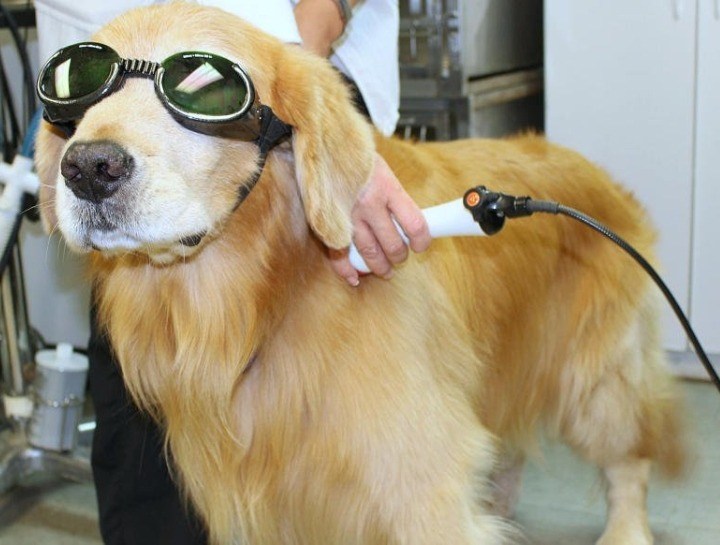
Watching a dog struggle with stiffness, a slow-healing wound, or post-surgical discomfort is hard for any pet owner. Traditional medication and rest help, but they are not always enough on their own. Companion laser therapy for dogs is a modern, drug-free treatment that complements traditional veterinary care and helps dogs recover more comfortably.
The treatment uses focused light energy to relieve pain, reduce inflammation, and accelerate tissue healing. It is FDA-approved, widely used in human sports medicine, and has become a trusted option in veterinary care over the past several years.
This guide explains how the therapy works, the conditions it can help, what a typical session looks like, and what to expect in the days and weeks after treatment begins.
What Is Companion Laser Therapy
Companion laser therapy is a non-invasive treatment that delivers deep-penetrating light waves into the affected tissues. The light energy is absorbed by cells, where it stimulates natural healing processes, improves circulation, and reduces inflammation.
The treatment involves no medications, no surgery, and no pain. Most dogs simply rest or relax while the laser is gently moved over the treatment area. It is used alongside traditional treatments rather than in place of them, which makes it a strong fit for dogs already on medication or recovering from a procedure.
The technology originated in human sports medicine, where it is widely used to manage soft-tissue injuries and accelerate recovery in athletes. The same principles apply in canine laser therapy, which is why so many dog owners notice a meaningful difference in their pet’s comfort and mobility.
How Laser Therapy Works in Dogs
The science behind the treatment is called photobiomodulation, which is the use of specific wavelengths of light to influence cellular activity. When the light reaches the targeted tissue, it produces three measurable effects:
- Increased cellular energy production, which speeds up tissue repair
- Improved blood flow, which carries oxygen and nutrients to the injured area
- Reduced inflammation and pain signaling, which provides noticeable comfort
These effects together support faster recovery from injury, surgery, and chronic conditions. Pain relief for dogs through laser therapy is gradual but cumulative, meaning each session builds on the progress of the one before it.
The depth of penetration is one of the key advantages. Light from a therapy laser can reach tissues several centimeters below the skin, which means it can treat joints, muscles, and deeper structures that topical treatments cannot.
Conditions That Benefit From Laser Treatment for Dogs
Laser therapy is used as a supportive treatment for a wide range of conditions in dogs. According to the protocols followed at our hospital, laser treatment for dogs can help with:
- Arthritis
- Wounds
- Hip dysplasia
- Post-surgical recovery
- Dental conditions, including extractions, gingivitis, and periodontal disease
- Ear infections
- Skin infections
- Sprains and strains
- Fractures
- Bruising and swelling
- Anal sac ailments
For dogs living with chronic joint conditions, the therapy is often used long-term as part of an ongoing comfort plan. For acute injuries or post-surgical cases, treatment is typically more concentrated in the early recovery period and tapers off as healing progresses.
Arthritis and joint conditions
Arthritis is one of the most common reasons dog owners explore laser therapy. As cartilage wears down and joint inflammation builds, dogs become stiff, slow to rise, and reluctant to climb stairs. Laser sessions reduce inflammation in the joint capsule and surrounding soft tissue, which often improves mobility and overall comfort.
Post-surgical recovery
After a procedure, the therapy is used to reduce swelling at the incision site, improve circulation to the healing tissue, and ease discomfort. Owners often pair laser sessions with the structured aftercare plan recommended following any veterinary surgery.
Wounds and skin infections
For wounds that are slow to close or skin infections that are sensitive to medication alone, laser therapy supports faster tissue regeneration. The increased circulation it produces helps the body deliver immune cells and nutrients to the affected area more efficiently.
Dental discomfort
Following dental extractions or treatment for gingivitis and periodontal disease, the therapy can soothe inflamed gums and support recovery. This is one of the lesser-known applications of canine laser therapy, but it can make a noticeable difference in dogs that are slow to eat after a dental procedure.
What to Expect During a Session
A typical session is short, calm, and well tolerated by dogs of all ages and temperaments. The exact duration depends on the area being treated and the condition involved.
| Step | What Happens |
| Initial exam | The veterinarian evaluates the condition and decides whether laser therapy is appropriate |
| Preparation | Protective goggles are placed on the dog and on staff, since the light is bright |
| Treatment | The handheld laser is moved gently over the area for several minutes |
| Comfort check | The dog rests or lies down throughout; most enjoy the gentle warmth |
| Wrap-up | No recovery time is needed, and the dog can return to normal activity right away |
There is no shaving, no needles and no anesthesia. Many dogs become so relaxed during the session that they doze off.
How Many Sessions Are Typically Needed
Treatment frequency depends on whether the condition is acute or chronic.
- Acute injuries or post-surgical cases: more frequent sessions early on, often two to three times per week for the first two weeks, then tapering as healing progresses
- Chronic conditions such as arthritis: an initial loading phase of several sessions over a few weeks, followed by maintenance visits scheduled based on the dog’s response
Most dogs show some improvement within one to three sessions, although the full cumulative benefit often becomes clear after several visits. Your veterinarian will create a treatment plan tailored to your dog’s diagnosis, age, and overall health.
Is Laser Therapy Safe
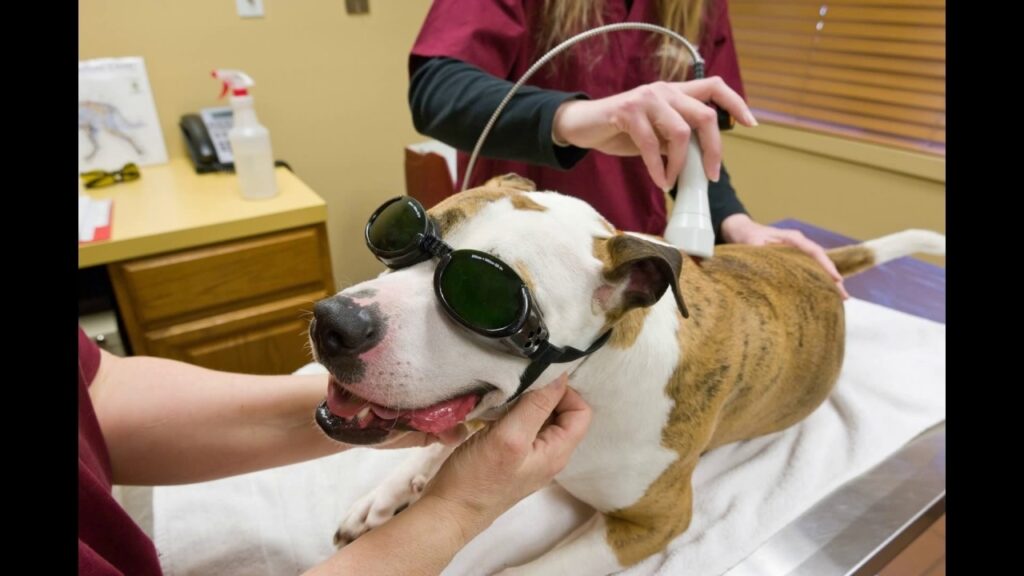
Laser therapy is one of the safest adjunct treatments available in modern veterinary medicine. It is non-invasive, drug-free, and has no significant side effects when administered by trained staff. The main precautions are straightforward:
- Both dogs and staff wear protective goggles during treatment
- Therapy is not applied directly over active tumors or in pregnant patients without specific veterinary guidance
- The laser is not used directly on the eyes
Because the treatment uses no medication, it can be safely combined with most existing prescriptions. This makes it especially valuable for senior dogs that may have multiple health conditions and limited tolerance for additional drugs. Dogs receiving the therapy as part of their long-term care plan are typically also monitored through regular wellness exams to track overall progress.
Signs Your Dog May Benefit From Laser Therapy
If your dog shows any of the following, it may be worth asking your veterinarian whether laser therapy could help:
- Stiffness when getting up from rest
- Reluctance to climb stairs or jump onto furniture
- Slower pace on walks than usual
- Limping or favoring one leg
- A wound that is healing slowly
- Discomfort after a recent surgery
- Persistent ear or skin irritation despite treatment
These changes are not always emergencies, but they often indicate underlying pain or inflammation that the therapy can help address.
Building a Long-Term Comfort Plan
For many dogs, especially seniors and those with chronic joint disease, laser therapy works best as part of a broader comfort plan that may include weight management, joint supplements, gentle exercise, and pain medication when appropriate. The therapy does not replace these elements, but it complements them in a way that few other treatments can. Owners often report that their dog seems brighter, more willing to move, and more like themselves once laser sessions become a regular part of care.
If your dog is recovering from surgery, living with arthritis, or healing from a stubborn wound, companion laser therapy may be a valuable addition to the treatment plan. To learn more or to schedule a consultation, visit our companion laser therapy page or request an appointment with the team at Eagle Animal Hospital in Chester Springs.
Frequently Asked Questions
Q: Does laser therapy hurt dogs?
A: No. The treatment is painless and most dogs find it relaxing. They often feel a gentle warmth as the laser is moved over the area. There are no needles, no shaving, and no anesthesia involved, which makes the experience low-stress for dogs of all ages.
Q: How long does each laser therapy session take?
A: Most sessions last between five and twenty minutes, depending on the size of the treatment area and the condition being addressed. Dogs can return to their normal activities immediately afterward, with no recovery time or restrictions on movement.
Q: How quickly will I see results from laser treatment for dogs?
A: Some dogs show visible improvement after just one or two sessions, while others need several visits before the benefits become clear. Chronic conditions like arthritis usually respond gradually, with cumulative gains in comfort and mobility as treatment continues over a few weeks.
Q: Can laser therapy replace my dog’s pain medication?
A: Not on its own. Laser therapy is used alongside traditional treatments rather than as a replacement. In some cases, dogs may eventually need lower doses of medication as their comfort improves, but any change to a prescription should always be discussed with your veterinarian.
Q: Is laser therapy safe for senior dogs?
A: Yes. It is one of the safest treatment options for senior dogs because it is non-invasive and drug-free. This makes it particularly useful for older dogs with arthritis, slow-healing wounds, or post-surgical needs that may not tolerate additional medications well.