
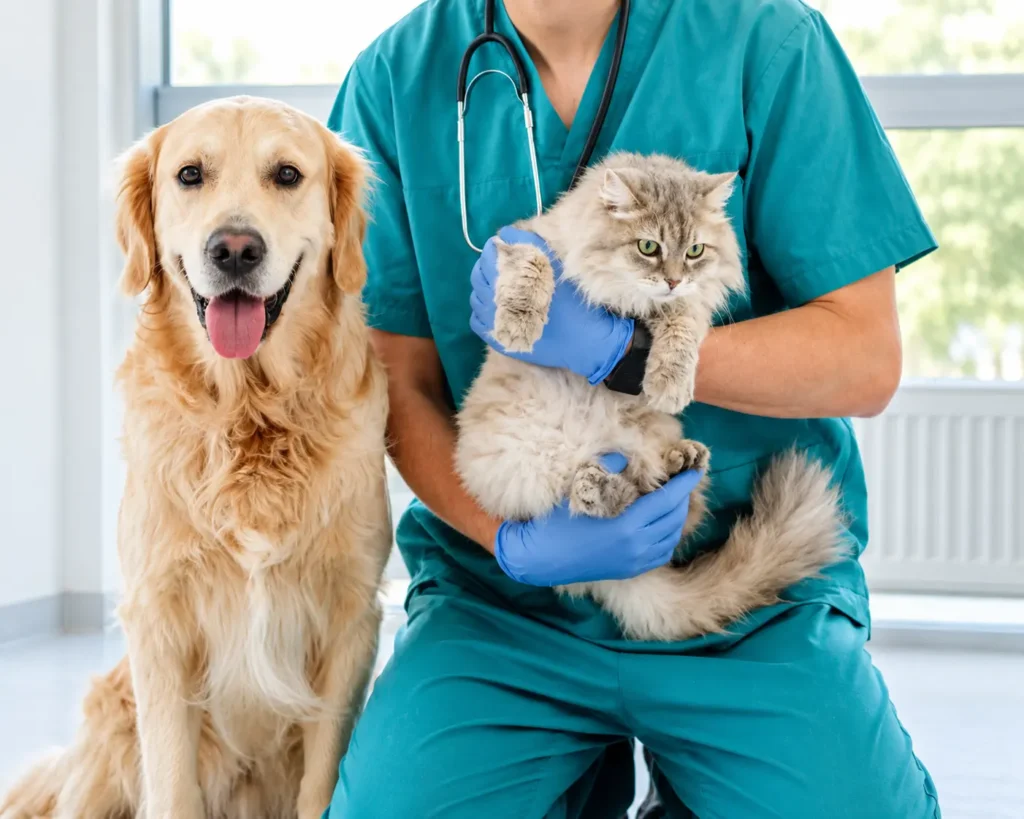
Few words in veterinary care leave pet owners as unsure as spay and neuter. People hear them next to fixed, altered and sterilized, and it is easy to nod along without knowing what the surgery actually changes. What does neutered and spayed mean for a puppy that is still growing or a kitten that has just come home? Both words describe an operation that removes reproductive organs, and the details of what is removed, what the day involves and how recovery goes are worth understanding well before surgery day.
The American Veterinary Medical Association (AVMA) explains in its owner brochure that in female dogs or cats the ovaries, fallopian tubes and uterus are removed, and that in male dogs or cats the testicles are removed. A neutered dog and a spayed cat have both had surgery under general anesthesia. Spay and neuter surgery is also among the most common surgeries at Eagle Animal Hospital in Chester Springs, so the team performs it regularly.
This guide explains what spayed and neutered mean, what the surgery removes, what the veterinary team checks beforehand, how recovery is described, and which questions the sources leave to an individual decision between you and your veterinarian.
What Does Neutered and Spayed Mean for Dogs and Cats
In everyday use, spayed describes a female and neutered describes a male. Both words stand for surgery. The AVMA brochure adds that spaying eliminates heat cycles.
Veterinary teams also use surgical names. The American College of Veterinary Surgeons (ACVS) describes ovariohysterectomy as removal of the uterus and ovaries and ovariectomy as removal of only the ovaries. Its separate page on castration covers the male surgery. Your veterinarian explains which version applies to your pet.
A cat spay uses the same terms. The AVMA brochure applies its descriptions to dogs and cats alike, while the two ACVS pages cited in this guide do not mention cats, so the recovery details below come from guidance that is not cat specific. Eagle Animal Hospital lists dog surgery and cat surgery at every life stage on its pet surgery page, from spay and neuter in young pets to mass removals in seniors.
What the Surgery Removes and How the Procedures Differ
| Everyday word | Surgical name | What is removed | Where the description comes from |
| Spayed (female) | Ovariohysterectomy | The uterus and the ovaries | The ACVS page on ovariohysterectomy; the AVMA brochure describes female dogs and cats as having the ovaries, fallopian tubes and uterus removed |
| Spayed (female) | Ovariectomy | Only the ovaries | The same ACVS page, which names it alongside ovariohysterectomy |
| Neutered (male dog or cat) | Castration | The testicles | The AVMA brochure, which applies it to male dogs and cats; the ACVS castration page addresses small animal patients |
ACVS describes the incision for an open ovariohysterectomy in some detail. It states that the incision is usually made on the abdominal midline, that its length varies with the size of the pet and other factors, and that it is closed in layers including the body wall, the subcutaneous tissue and the skin.
Before Surgery Day: The Exam and Pre-Anesthetic Bloodwork
A spay or neuter starts with preparation. Eagle Animal Hospital’s new puppy resources describe pre-anesthetic bloodwork performed 1 to 8 weeks before the surgery is scheduled, and the practice’s pet surgery page describes individualized monitoring during the procedure. Its bloodwork page describes comprehensive in-house blood testing that evaluates red and white blood cell counts, kidney and liver function, blood sugar levels and electrolyte balance, and says the doctors typically receive results by the following day. That page does not mention pre-anesthetic screening by name.
The ACVS castration page states that young, healthy patients presenting for routine elective castration need only a preliminary screening of blood work, and the ACVS spay page notes that additional tests for older dogs may include a complete blood count, serum chemistry and urinalysis. The amount of testing a pet needs depends on age and health, so your own veterinarian is the best guide.
A short list of questions makes the pre-surgery visit more useful.
● Ask which procedure the veterinarian plans for your pet and why, so that terms such as ovariohysterectomy are familiar by surgery day.
● Ask when the pre-anesthetic bloodwork will be done in relation to the surgery date.
● Ask what activity restriction to expect afterward and whether a protective collar is likely, since ACVS says an Elizabethan collar may be necessary to prevent licking of the surgical wound.
● Ask whether a microchip can be placed at the same time. The practice’s new kitten resources say a microchip is typically placed at the time of spay or neuter.
What Happens on Surgery Day and During Recovery
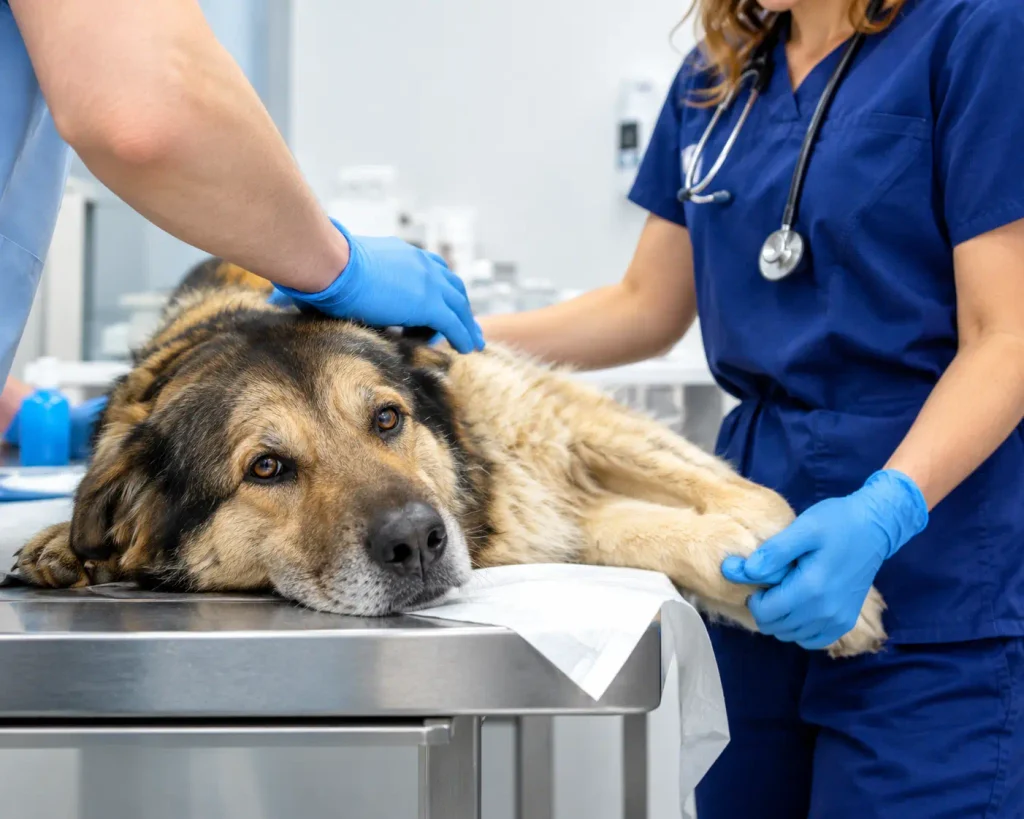
The AVMA brochure states that general anesthesia keeps the pet comfortably asleep during surgery and that medications will be given to minimize pain. ACVS adds that pain medications are often prescribed for several days after a spay.
Recovery guidance differs between the sources. The AVMA brochure says owners will be asked to keep a pet calm and quiet for a few days as the incision begins to heal. The ACVS spay page calls for house rest with no running, jumping or rough play for two weeks following surgery, and the ACVS castration page describes controlled leash walks for two weeks and surgical sutures removed 10 to 14 days after surgery. Eagle Animal Hospital’s pet surgery guide describes about 7 to 10 days of restricted activity for routine spays and neuters, and it lists the signs that warrant a follow-up call during healing. The lengths differ, so the instructions you receive for your own pet matter more than any general figure.
Benefits and Risks of Spay and Neuter Surgery
For females, ACVS lists a vastly decreased chance of mammary (breast) cancer, elimination of the chance of pyometra (a uterine infection), elimination of unwanted estrous behavior and associated bleeding, and prevention of unwanted pregnancy and the risk of difficult birth. The AVMA brochure adds that neutering can eliminate the risk of testicular cancer and reduce the risk of enlarged prostate glands, that spaying stops heat cycles, and that the surgery results in less roaming and fewer urine-marking behaviors. It also states that studies have repeatedly shown spayed or neutered dogs and cats live longer on average.
Risks exist, though the AVMA brochure calls them typically low. ACVS lists mild complications of ovariohysterectomy such as incisional bruising, swelling and infection, and states that hemorrhage and urinary obstruction are rare but can be life threatening. It also notes that the surgery can be more difficult in larger or obese pets and that urinary incontinence has been reported after surgery and may require lifelong medical treatment. The AVMA brochure adds that spayed and neutered dogs and cats are more at risk of becoming overweight and that, in dogs, other potential risks include certain types of cancer and joint disease.
Timing and Individual Decisions for a Neutered Dog
Timing is where the sources are most careful. The AVMA brochure states that when it comes to dogs there is no one-size-fits-all recommendation, and that timing depends on breed, age, sex, personality, role, home environment and health status. The ACVS castration page states that the role of neutering in the later development of certain cancers or orthopedic disease remains controversial and that limited evidence exists for the appropriate age to perform routine castration.
For a neutered dog the AVMA and ACVS treat timing as an individual decision. Eagle Animal Hospital’s new puppy and new kitten resources give the practice’s recommended ages, and you can ask about them at your pet’s next wellness exam. The AVMA brochure adds one point for females: there is no known benefit to delaying a spay until after the first heat cycle.
Keeping Your Pet Comfortable Before and After Surgery
Preparation is mostly information. Knowing what the surgery removes, what the veterinary team checks first and what recovery asks of you makes an unfamiliar operation easier to plan for. Following the activity restriction your veterinarian gives, and watching the incision as Eagle’s surgery guide advises, are the owner’s part of the work.
If you are deciding about a spay or a neuter, or you want to understand the process before choosing a date, the team at Eagle Animal Hospital in Chester Springs provides dog and cat surgery, including spay and neuter. Request an appointment online to ask about your pet.
Sources
American Veterinary Medical Association, Spaying & Neutering owner brochure (copyright 2020).
Professional veterinary association owner brochure, credited to the veterinarian and the AVMA. No sponsor is named.
Supports the definitions of spay and neuter, the dog and cat statements, the benefits, the risks and the general recovery wording.
American College of Veterinary Surgeons, Ovariohysterectomy (accessed 2026).
Professional college of veterinary surgeons, owner information page with no author shown and a page modification date of June 2023. A site-wide Premier Sponsors list that includes animal health companies such as Elanco and Zoetis appears on the page, and no sponsor is tied to this article.
Supports the surgical names, the incision and closure, the benefits, the risks and the two week recovery wording.
American College of Veterinary Surgeons, Castration (accessed 2026).
Professional college of veterinary surgeons, owner information page with no author shown and a page modification date of June 2023. A site-wide Premier Sponsors list that includes animal health companies such as Elanco and Zoetis appears on the page, and no sponsor is tied to this article.
Supports the screening bloodwork, recovery, suture removal and the points on timing and uncertainty.
Statements about Eagle Animal Hospital come from the practice’s own pages on pet surgery, new puppy resources, new kitten resources, bloodwork and its surgery guide, each linked where it is used.
Frequently Asked Questions
Q: What does neutered and spayed mean for a dog or cat?
A: Spayed describes a female whose reproductive organs have been surgically removed, and neutered describes a male whose testicles have been removed. The AVMA brochure states that in female dogs or cats the ovaries, fallopian tubes and uterus are removed, and that in male dogs or cats the testicles are removed.
Q: Is a cat spay the same surgery as a dog spay?
A: The AVMA brochure applies the same description to dogs and cats. The two ACVS pages used for this guide do not mention cats, so ask the veterinary team for the instructions that apply to your cat.
Q: Does a neutered dog need bloodwork before dog surgery?
A: ACVS states that young, healthy patients presenting for routine elective castration need only a preliminary screening of blood work. Eagle Animal Hospital’s new puppy resources describe pre-anesthetic bloodwork performed 1 to 8 weeks before surgery is scheduled.
Q: How long does recovery from a spay or neuter take?
A: The sources give different lengths. The AVMA brochure describes keeping a pet calm and quiet for a few days, ACVS describes two weeks of restricted activity, and Eagle Animal Hospital’s pet surgery guide describes about 7 to 10 days for routine spays and neuters. The veterinary team gives the instructions for your pet.
Q: What are the risks of spay and neuter surgery?
A: The AVMA brochure states that surgical and anesthetic risks are typically low. ACVS lists mild complications such as incisional bruising, swelling and infection, and rare but potentially life threatening ones such as hemorrhage and urinary obstruction.