

Lyme disease is one of the most common tick-transmitted illnesses in dogs in the northeastern United States, and Chester County sits squarely in tick-endemic territory. Wooded trails, grassy fields, and wildlife-heavy environments create year-round exposure risk for dogs that spend any time outdoors.
Knowing how often dogs should be vaccinated for Lyme disease, and understanding what the schedule looks like at each life stage, helps owners stay ahead of an illness that can cause serious complications when left unaddressed. The Lyme disease vaccine for dogs is a core part of preventive pet care in this region, and timing matters as much as the vaccine itself.
This guide explains what Lyme disease does to dogs, how the vaccine works, and what the schedule looks like from puppyhood through adult life.
What Lyme Disease Does to Dogs
Lyme disease is caused by the bacteria Borrelia burgdorferi, which is transmitted through bites from infected ticks. In dogs, the infection can produce a range of symptoms, from mild and temporary to serious and long-lasting.
Common signs of Lyme disease in dogs include:
- Lethargy and general fatigue
- Painful or swollen joints, which may cause limping or reluctance to move
- Fever
- Loss of appetite
In more serious cases, the bacteria can affect the kidneys and lead to acute kidney injury. This form of the disease, sometimes called Lyme nephritis, is particularly concerning because it can progress quickly and is difficult to treat once established. Early vaccination and consistent tick prevention are the most reliable ways to reduce this risk.
How the Lyme Disease Vaccine for Dogs Works
The Lyme disease vaccine for dogs works by prompting the immune system to produce antibodies against Borrelia burgdorferi before any tick exposure occurs. Unlike some diseases where a single dose provides long-lasting protection, Lyme immunity requires consistent reinforcement because the bacteria has mechanisms that help it evade immune detection.
This is why the dog Lyme vaccine schedule includes an initial series during puppyhood followed by yearly boosters throughout adult life. A dose given once and then forgotten will not provide adequate ongoing protection.
The Dog Lyme Vaccine Schedule by Life Stage
The schedule follows AVMA-recommended protocols and is tailored to your dog’s age and health history at the time of the first visit.
Puppies
The Lyme vaccine is introduced as part of the broader puppy vaccination series. The standard protocol is as follows:
| Age | Vaccine Given |
| 12 weeks | Lyme (first dose), alongside DAPPv with Leptospirosis and Rabies |
| 16 weeks | Lyme booster, alongside DAPPv with Leptospirosis booster and Influenza |
The two-dose puppy series builds the initial immune response. Missing the booster at 16 weeks leaves the series incomplete, which is why keeping both appointments is important.
Adult Dogs After Year One
Once the puppy series is complete and the dog has passed its first year, the Lyme vaccine moves to an annual schedule. This yearly booster is given alongside other lifestyle vaccines including Leptospirosis, Bordetella, and Canine Influenza. For dogs with regular outdoor exposure in Chester County, staying current on this yearly dose is an important part of long-term preventive pet care.
Your veterinarian will review your dog’s vaccine history at each annual wellness visit and confirm which vaccines are due. If you have adopted an adult dog whose records are incomplete or unknown, your veterinarian will create a plan to bring their protection up to date.
Why Yearly Boosters Are Necessary

Some dog owners question whether the yearly Lyme booster is truly necessary after the initial puppy series. The answer relates to how Lyme immunity works in dogs. Unlike core vaccines such as DAPPv and Rabies, which provide protection for three years after the first year booster, lifestyle vaccines including Lyme require annual renewal to maintain adequate antibody levels.
Tick exposure in this region does not follow a seasonal pattern the way many people assume. While tick activity peaks in warmer months, ticks can remain active and feed on dogs during mild winter days. Year-round protection through annual vaccination, combined with consistent tick prevention products, is the most reliable approach.
Lyme Vaccination and Tick Prevention Work Together
The Lyme vaccine significantly reduces the risk of infection but is most effective as part of a broader prevention strategy. Tick prevention products remove or kill ticks before they have a chance to transmit bacteria, which requires several hours of attachment.
Several tick prevention options are recommended as part of comprehensive preventive pet care. Your veterinarian can recommend the product that best suits your dog’s age, weight, and lifestyle. Keeping up with year-round tick prevention alongside the annual Lyme booster gives dogs the strongest possible protection in this region. For a full overview of the vaccine protocols followed at our practice, visit our pet vaccinations page.
Monitoring Your Dog Between Vaccine Appointments
Even vaccinated dogs can occasionally contract Lyme disease, particularly if a tick attachment goes undetected or if the immune response is incomplete. Owners should check their dog for ticks after any time outdoors, paying close attention to areas where ticks prefer to hide, including around the ears, between the toes, under the collar, and in the groin area.
Contact your veterinarian if your dog shows any of the following after a known or suspected tick bite:
- Sudden onset of limping or joint stiffness
- Lethargy that is out of character
- Loss of appetite lasting more than a day
- Visible swelling in the joints
- Changes in urination, which may signal kidney involvement
Routine wellness exams also include a review of parasite prevention and vaccine history, which gives your veterinarian a chance to catch any gaps before tick season peaks. For guidance on what routine wellness visits cover, see our pet wellness page.
Keeping Your Dog Protected Year After Year
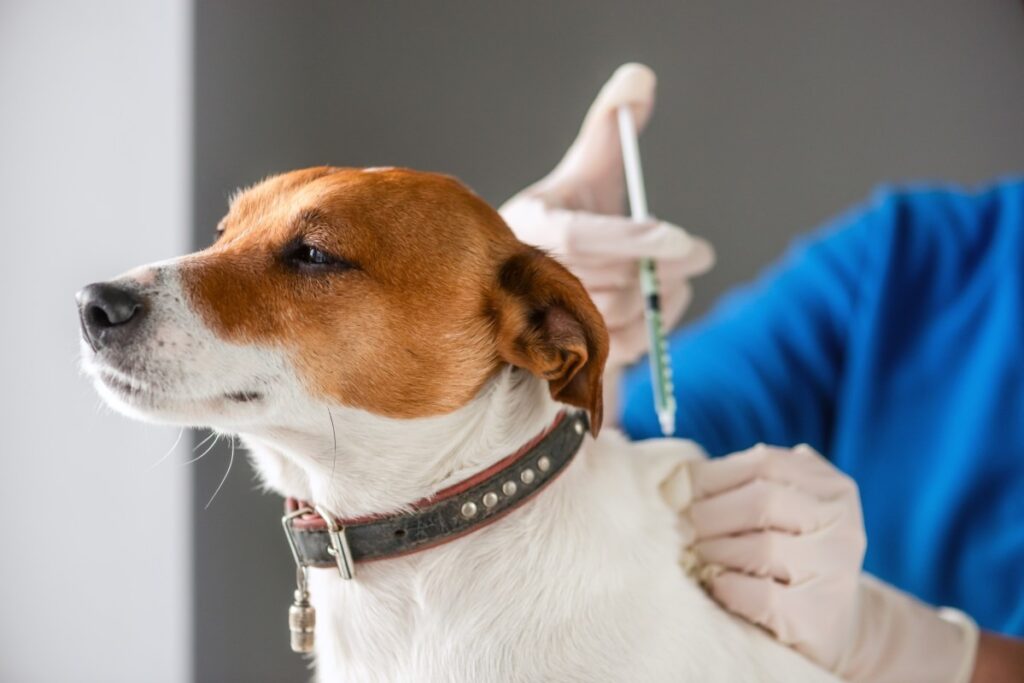
The dog Lyme vaccine schedule is straightforward once established. Puppies receive their first dose at 12 weeks and a booster at 16 weeks, and adult dogs receive a yearly booster as part of their annual wellness visit. In a region like Chester County, where ticks are a consistent presence year-round, this level of consistency is one of the most practical things a dog owner can maintain.
If your dog is overdue for a Lyme booster, or if you have a new puppy that has not yet started the vaccine series, the team at Eagle Animal Hospital in Chester Springs can help get them on the right schedule. Request an appointment online or visit our new puppy resources page for a full overview of what the first year of care involves.
Frequently Asked Questions
Q: At what age does a dog get the first Lyme vaccine?
A: The first dose of the Lyme vaccine is given at 12 weeks of age as part of the puppy vaccination series. A booster follows at 16 weeks to complete the initial series. After the first year, the vaccine is given annually to maintain protection.
Q: Is the Lyme vaccine necessary for dogs that mostly stay indoors?
A: If your dog ever goes outside, even briefly for walks or yard time in tick-prone areas like Chester County, the Lyme vaccine is worth discussing with your veterinarian. Ticks can attach quickly and are found in grass, leaf litter, and wooded edges near suburban homes.
Q: How long does Lyme vaccine protection last in dogs?
A: Protection from the Lyme vaccine is maintained through yearly boosters. Unlike core vaccines such as DAPPv and Rabies, which are given every three years after the first-year booster, the Lyme vaccine requires annual renewal to keep antibody levels adequate for ongoing protection.
Q: Can a dog still get Lyme disease after being vaccinated?
A: Vaccination significantly reduces the risk but does not eliminate it entirely. Combining the annual Lyme vaccine with year-round tick prevention products provides the strongest protection. Contact your veterinarian if your dog shows signs of joint pain, lethargy, or changes in urination after a tick bite.
Q: Does the Lyme vaccine have any side effects in dogs?
A: Most dogs tolerate the Lyme vaccine well with no reaction. Some may experience mild soreness at the injection site or brief tiredness that resolves within one to two days. More significant reactions such as vomiting, facial swelling, or hives are uncommon and should be reported to your veterinarian promptly.