
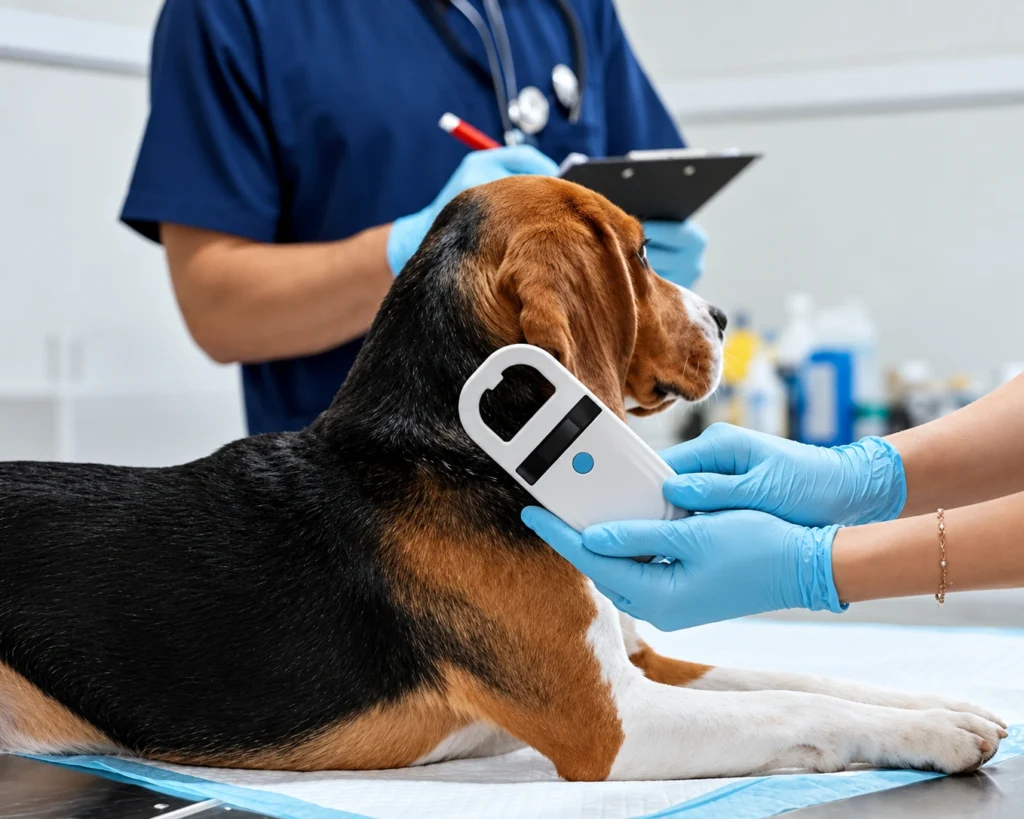
A dog that slips out of a gate left ajar or a cat that bolts out an open door during a move is one of the most stressful experiences a pet owner can face. A collar can fall off, and a tag can wear smooth or go missing, but a microchip stays in place for the animal’s whole life. Understanding how to microchip a dog is simpler than most owners expect, and the procedure itself takes only a moment during a visit your dog is already making.
Chester County sees its share of dogs and cats that go missing during storms, fireworks, or a move to a new home, and animal control and shelters in the area rely on universal scanners that can read a microchip regardless of which brand or clinic implanted it. That makes microchipping one of the few identification tools that keeps working long after a collar comes off. The American Veterinary Medical Association notes that veterinary clinics, shelters and animal control agencies routinely scan stray animals for microchips, and that universal scanners can read virtually all microchips commonly used in the United States. Older chips that operate at 125 or 128 kHz may not be read by a scanner that detects only the 134.2 kHz standard.
This guide explains what a microchip actually is, how to microchip a dog during a routine appointment, what happens afterward to make the chip useful, and when most puppies and kittens typically get chipped.
What Is a Microchip and How to Microchip a Dog
A microchip is a tiny electronic transponder, about the size of a grain of rice, encoded with a unique identification number. Answering how to microchip a dog is straightforward: during a normal appointment as part of our veterinary services, the veterinary team uses a needle slightly larger than a standard vaccine needle to place the chip just beneath the skin between the shoulder blades. There is no incision, no stitches, and no sedation required for the vast majority of dogs.
The chip itself does not track location and does not require a battery, since it only activates when a scanner passes over it and reads the identification number. That number means nothing on its own until it is linked to an owner’s contact information in a pet recovery database, which is the step that actually reunites a lost pet with its family.
Why Microchipping Matters for Lost Pet Recovery
A collar and tag are the first thing most people check on a found dog, but collars are also the first thing that comes off during a scuffle with a fence, a bath, or a scared bolt through brush. A microchip cannot fall off or be removed accidentally, which is why shelters and veterinary hospitals scan every incoming stray before doing anything else. Dogs with a registered, up to date microchip are returned to their owners far more often than dogs relying on a collar alone, simply because the chip survives the exact situations that cause a collar to go missing. A study of more than 7,700 stray animals at shelters, reported by AVMA JAVMA News, found that microchipped dogs were returned to their owners 52.2 percent of the time versus 21.9 percent for dogs without chips, and microchipped cats 38.5 percent of the time versus 1.8 percent.
It is not only outdoor or adventurous pets that benefit. Indoor cats and dogs that have never left the yard unsupervised are just as likely to slip out during a delivery, a contractor visit, or a holiday gathering with an unfamiliar door left open longer than usual. Owners who assume microchipping is only for pets that roam are often the ones least prepared when a normally cautious pet gets out unexpectedly, which is part of why the veterinary team recommends it as a standard part of routine care rather than something reserved for high-risk pets.
What Happens During a Dog Microchipping Appointment
A dog microchipping appointment is brief enough that most owners are surprised when it is already finished.
| Step | What Happens |
| Scanning first | The veterinary team scans for an existing chip to confirm the dog is not already chipped |
| Placement | The chip is loaded into a sterile, single-use syringe and injected under the skin between the shoulder blades |
| Sensation | Most dogs react the same way they do to a vaccine, a brief pinch rather than ongoing discomfort |
| Confirmation scan | The team immediately scans the injection site to confirm the chip reads correctly |
| Paperwork | The owner receives the chip’s unique ID number and registration instructions before leaving |
No recovery time is needed, and dogs typically return to normal activity right away, including play and walks later the same day.
Registering the Microchip After Implantation
A microchip that is placed but never registered is little more than an inert piece of plastic, since the identification number only connects back to an owner once it is entered into a pet recovery database along with current contact information. This step is easy to overlook, but it is the entire reason a microchip works. The same report states that the usual reason microchipped animals were not returned was incorrect or missing owner information. Owners should register the chip promptly after the appointment, then update the registration any time a phone number, address, or email changes, particularly after a move within or out of Chester County.
Microchipping Cats Too
While dog microchipping tends to get more attention, cat microchip placement follows the same procedure and matters just as much, if not more, for indoor-outdoor cats that roam a wider territory than most people realize. A cat that ends up several blocks from home with no collar, which is common since many cat collars are designed to break away for safety, has essentially no way to be identified without a chip. The same universal scanners used for dogs read feline microchips without any special equipment.
When Dogs Typically Get Microchipped
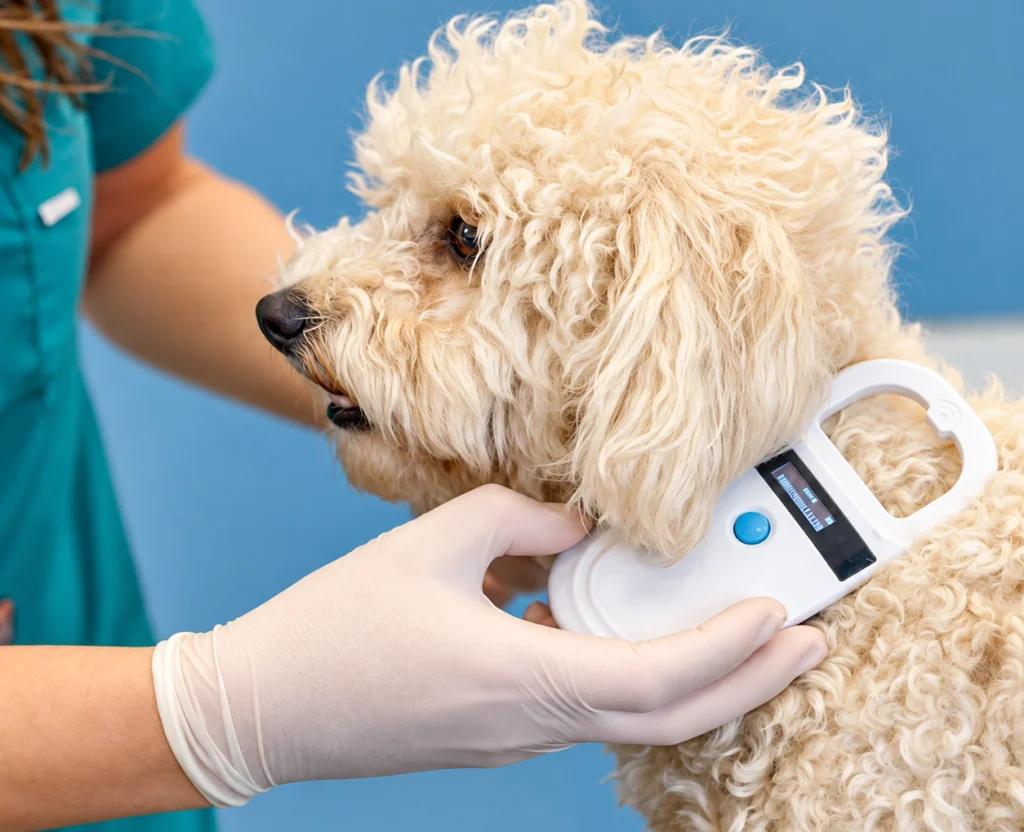
Microchipping is commonly done during a puppy’s early wellness visits, often alongside a scheduled vaccine appointment, since the dog is already at the hospital and the additional procedure adds only a moment to the visit. That said, there is no upper age limit. Adult dogs adopted from a shelter, rescued as strays, or simply never chipped as puppies can be microchipped at any wellness exam or alongside their next round of vaccinations. The same applies to kittens and adult cats through our new kitten resources.
Is Microchipping Safe for Dogs
Microchipping is considered a routine, low-risk procedure that has been used in veterinary medicine for decades. The chip itself is inert, biocompatible, and does not require any ongoing maintenance, battery replacement, or follow-up procedure once it is placed. Minor swelling or tenderness at the injection site occasionally occurs and typically resolves within a day or two, similar to a vaccine site. Migration of the chip to a nearby area of loose skin is possible but rare, and it does not affect how the chip functions or how a scanner reads it.
What to Know Before Your Dog’s Microchipping Appointment
A few practical points make the process easier and help the chip actually do its job once it is in place:
- A microchip is not a GPS device and cannot be used to track a dog’s real time location, so it should be treated as a backup identification method rather than a replacement for a collar and visible tag.
- Registration is a separate step from implantation, and it needs to happen soon after the appointment for the chip to be useful if the dog is ever lost.
- Contact information tied to the chip should be updated immediately after any move, phone number change, or change in who is listed as the primary contact.
- Bringing a current phone number and address to the appointment speeds up registration before you even leave the building.
- Asking the veterinary team to scan the chip at each annual wellness exam confirms it is still functioning and still reads correctly.
Keeping Your Dog Safe for Life
A microchip will not stop a dog from squeezing through a gap in the fence or a cat from darting out an open door, but it dramatically improves the odds that a lost pet finds its way home. Combined with a properly fitted collar and an up to date ID tag, it is one of the simplest, longest-lasting steps an owner can take for a pet’s safety.
If your dog or cat is not yet microchipped, or if it has been years since you have confirmed the registration is current, the team at Eagle Animal Hospital in Chester Springs can take care of both in a single visit. Request an appointment online to get your pet chipped, registered, or checked at your next visit.
Sources
American Veterinary Medical Association, Microchipping: FAQs for Pet Owners (accessed 2026).
Professional veterinary association.
Supports routine scanning by clinics and shelters, universal scanners and microchip frequencies.
American Veterinary Medical Association, JAVMA News, Pet owners, shelters, and clinics: Check the chip (2017).
Professional association news report on a peer reviewed study (Lord et al., JAVMA 2009).
Supports the return to owner rates for dogs and cats and the registration point.
Frequently Asked Questions
Q: How to microchip a dog if they are anxious at the vet?
A: The procedure itself is quick enough that most dogs, even anxious ones, tolerate it well, since it feels similar to a routine vaccine and is over within seconds. For dogs that are especially fearful, the veterinary team can time the microchip alongside an appointment the dog is already comfortable with, such as a wellness exam, to minimize additional stress.
Q: Does microchipping hurt dogs or cats?
A: Most pets react the same way they do to a vaccine injection, a brief pinch that passes quickly. No sedation or anesthesia is needed for the vast majority of dogs and cats, and normal activity can resume immediately afterward.
Q: How long does a microchip last?
A: A microchip is designed to last the animal’s entire lifetime without needing replacement, a battery, or any maintenance. As long as the registration stays current, the chip continues to function for as many years as the pet is scanned.
Q: Can a microchip be tracked like a GPS device?
A: No. A microchip only stores an identification number that becomes readable when a scanner is passed directly over it, typically at a shelter, animal control office, or veterinary hospital. It cannot show a pet’s location in real time the way a GPS collar can.
Q: What happens if I move or change my phone number after my dog is microchipped?
A: The chip itself does not change, but the registration tied to it needs to be updated with your new contact information as soon as possible. A chip with outdated contact details cannot reconnect a found pet with its owner, even though the chip is still functioning correctly.